
 16 June, 2026 16:48:13 IST
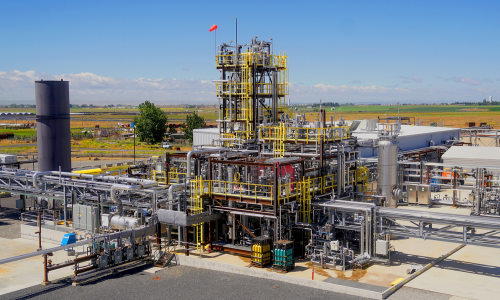
US-based Twelve has commissioned ‘AirPlant One’, a commercial-scale power-to-liquid (PtL) sustainable aviation fuel (SAF) facility in Moses Lake, Washington — the first plant in the US to produce jet fuel from CO2, renewable electricity, and water at commercial scale.
Where conventional SAF pathways depend on agricultural feedstocks with inherent land and supply constraints, Twelve’s eManufacturing process captures CO2 from the air, combines it with water and renewable electricity, and converts those inputs into hydrocarbon fuel molecules using an electrolyser.
The plant produces E-Jet fuel, a synthetic aviation fuel chemically identical to conventional jet fuel and certified to ASTM D7566 Annex A1 standards, requiring no modifications to aircraft, engines, or airport infrastructure. The facility also produces E-Naphtha, a CO2-derived drop-in substitute for conventional naphtha used as a feedstock for plastics, solvents, and synthetic fibres.
Twelve claims E-Jet fuel delivers up to 90% lower lifecycle CO2 emissions compared to conventional jet fuel.
Alaska Airlines, which along with Microsoft committed to purchase output from the facility in 2022, will operate regular domestic flights using E-Jet SAF produced at ‘AirPlant One’. Alaska Star Ventures also participated in Twelve’s $645-mn funding round. Microsoft supported the project through its Climate Innovation Fund and an SAF offtake agreement.
Mr. Nicholas Flanders, Co-Founder and CEO, Twelve, said the facility proves “that the fuels powering the global economy could be made from renewable electricity and air, anywhere in the world.”
Twelve said the cost structure, anchored to long-term power purchase agreements, enables fixed-price fuel contracts over a decade-long horizon.
Twelve said it is already partnering with brands to produce ‘E-Made’ products made with E-Naphtha, providing an upstream solution for decarbonizing everyday products. To date, the company has delivered proof-of-concept projects to global firms including Mercedes-Benz (interior automotive components from CO2-based polymers), Pangaia (CO2Made polycarbonate sunglass lenses), and Procter & Gamble (CO2-based ingredients for Tide laundry detergent).
Twelve said its technology is designed to scale to additional production sites and airline partners, and fuel and chemical products.