18 July, 2025 13:38:35 IST
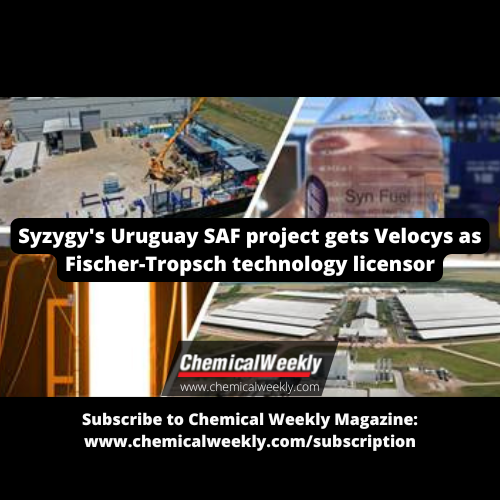
Syzygy Plasmonics, the US-based electrified biogas-to-SAF technology developer, has taken on board Fischer-Tropsch technology supplier Velocys, for its sustainable aviation fuel (SAF) project in Uruguay.
The 'NovaSAF 1' facility will convert dairy waste and biogas into drop-in jet fuel with a nameplate capacity of 500,000 gallons annually, using only renewable electricity and waste gas – without green hydrogen and complex gasification.
At the heart of the project is Syzygy's light-driven GHG e-Reforming technology, which produces the ideal 2:1 syngas ratio for Fischer-Tropsch (FT) synthesis directly from biogenic methane and CO₂. This breakthrough eliminates the need for water-intensive steam reforming or expensive electrolysers, radically simplifying the SAF value chain.
To convert that syngas into high-yield jet fuel, Syzygy has selected Velocys and its microFTL technology, known for reliability and for maximising fuel output, both critical factors in driving down the total cost required to produce synthetic fuel.
"This project proves that profitable SAF production doesn't have to wait on future infrastructure," said Mr. Trevor Best, CEO of Syzygy Plasmonics. "With Velocys, we are bringing in a complete, modular solution that drives down overall production costs and is ready to scale. Uruguay is only the start," he remarked.
The final investment for the 'NovaSAF 1' project is expected in Q4 2025, with the start of operations some time in Q1 2027.
"With its modular design and feedstock flexibility, NovaSAF 1 is built for replication across 50,000+ untapped biogas sites worldwide—unlocking a new era of profitable, policy-aligned SAF production," Syzygy said.