
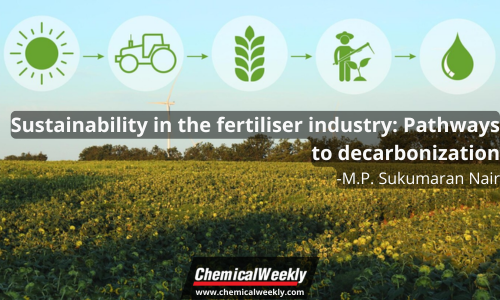
M P Sukumaran Nair, Director, Centre for Green Technology & Management (CGTM), outlines how the fertiliser industry is advancing toward a low‑carbon future while safeguarding global food security. Ammonia production remains one of the sector’s largest sources of emissions, but innovations in process efficiency, carbon capture and storage (CCS), green hydrogen, methane pyrolysis, and electrification are creating viable decarbonisation pathways. The article also highlights major efficiency gains in urea, phosphatic, potassic, sulphuric acid, and phosphoric acid production. Achieving net‑zero fertilisers will require significant investment, policy support, international collaboration, and continued technological innovation across the entire value chain.
 Back
 15 October, 2026 16:05:50 IST
Sustainability in the fertiliser industry: Pathways to decarbonization
Other News

2 November, 2026 18:04:08 IST
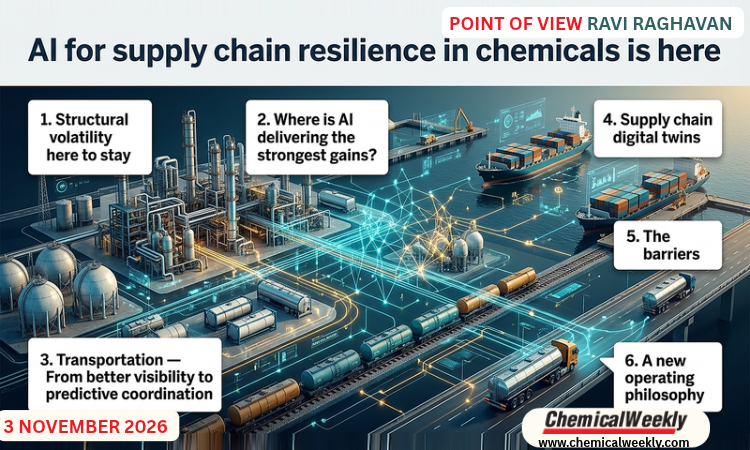
AI for supply chain resilience in chemicals is here
Chemical supply chains now operate as “integrated decision networks,” where production planning, demand forecasting, inventory optimisation, transportation capacity, po...

6 November, 2026 16:01:05 IST
Grasim, Suzlon team up to pilot chemically recyclable wind turbine blades
Mumbai-based Grasim Industries, a diversified Aditya Birla Group company with businesses in cellulosic fibres, chemicals and...
PRINT EDITION




Nov 3, 2026
View Digital Issue
Download Issue
View Past Issues
Search For
Exhibitions & Conferences



Watch





OTHER PUBLICATIONS

DATABASES
