4 March, 2025 16:44:11 IST
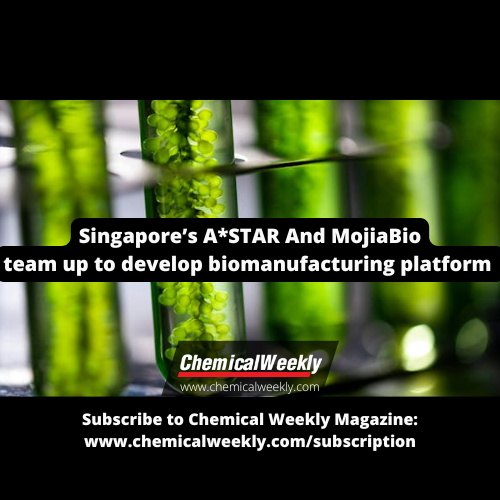
The Agency for Science, Technology and Research (A*STAR), Singapore’s leading public sector R&D agency, and MojiaBio, a Singapore-headquartered specialist in green chemistry and sustainable biomanufacturing, are developing an SGD 44.8-mn ($33-mn) Sustainable Biomanufacturing Technology Platform (SBTP).
“By integrating advanced synthetic biology and bioprocessing innovations, the SBTP aims to position Singapore as a leading player in sustainable biomanufacturing, accelerating the transition to a circular bioeconomy and net-zero future,” a press note from the collaborators stated.
The SBTP is seeking to differentiate itself from other existing bio-based molecules in the market, by “the innovative use of cost-effective sources like methanol and ethylene glycol”, which enables the platform to produce scalable, sustainable alternatives to conventional chemical processes. This includes the production of 1,3-propanediol (PDO), a key ingredient for a broad array of industries such as skincare products, coatings and biodegradable plastics.
At the heart of the SBTP is MojiaBio’s proprietary Cn+Bio pathway and OrthBio bioconversion process, designed to convert low-cost, renewable sources into bio-based molecules. This will be developed in close collaboration with A*STAR Singapore Institute of Food and Biotechnology Innovation (A*STAR SIFBI) - which will provide expertise on enzyme engineering - to ensure a faster, more reliable, and higher-yield conversion.
“The SBTP will not only produce bio-based molecules but also support downstream application research to synthesise high-value sustainable products for different industries,” said Dr. Ramon Gonzalez, MojiaBio CSO. “Through our partnership with A*STAR, we will be able to accelerate the commercialisation of green PDO to meet the growing demands and needs of the market”.
The SBTP leverages advanced synthetic biology and integrates the National University of Singapore (NUS)’ computational modelling expertise to engineer enzymes and microbial strains, optimising them as biocatalysts. Unlike conventional fermentation methods, the platform operates independently of its host cell metabolism, which significantly enhances energy efficiency, scalability, and sustainability while reducing production costs.
Professor Tan Sze Wee, Assistant Chief Executive from A*STAR Biomedical Research Council said, “By leveraging synthetic biology and enzyme engineering capabilities at A*STAR SIFBI and A*STAR Institute of Sustainability for Chemicals, Energy and Environment (A*STAR ISCE2) and forming strategic private-public partnerships, we are laying the foundation for further advancements in sustainable biomanufacturing across multiple industries. This collaboration will not only accelerate Singapore’s bioeconomy growth but also underscore our commitment to advancing in value-added ingredient innovation and green technologies.”
Dr. Gonzalez also informed that MojiaBio is also progressing on establishing its operational headquarters and a dedicated research laboratory in Singapore to accelerate commercialisation of other green chemicals.