2 January, 2024 16:18:51 IST
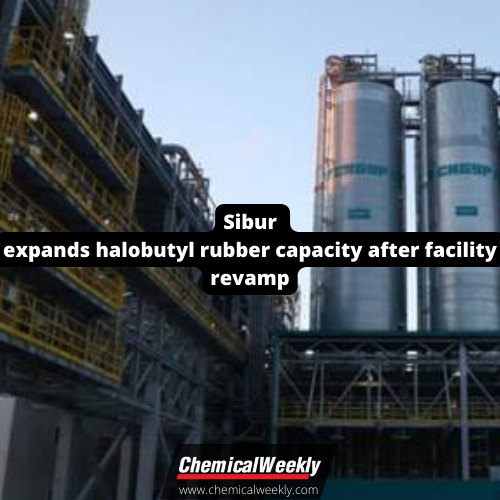
Russian petrochemicals major, Sibur, has announced the completion of the upgrade of its halobutyl rubber (HBR) manufacturing facility at Nizhnekamsk, Russia.
The only Russian maker of HBR, Sibur, said the ramp helped increase capacity by one third, from 150 to 200 kilotonnes per annum (ktpa). The Euro 79-mn upgrade, involved the installation of six new HBR production units and the revamp of 16 others.
The upgrade, it said, will meet domestic HBR demand and increase Russia’s exports of high-margin materials to “friendly countries” such as China, Thailand, Vietnam, and India.
The Russian unit is the world’s largest HBR production site, said the group, which now claims to account for 25% of global butyl rubber and HBR output.
The plant licensor is Yarsintez Research Institute, and the general designer is Kazan National Research Technological University, one of Sibur’s anchor universities.
“This rubber facility is indeed the most advanced of those that exist today. Its upgrade started back in 2020, before Sibur acquired assets in Tatarstan,” said Mr. Mikhail Karisalov, Chairman and CEO of Sibur.
Despite the 30% increase in output, there will be no increase in the facility’s environmental impact, according to Sibur. The group also “made the project technologically independent by installing a modern automatic process control system made in Russia.”
Halobutyl rubbers are primarily used to produce tyres with improved gas barrier and deformation resistance, along with tensile strength. An HBR component also increases tyre life by 15-20%, reduces total waste throughout the lifespan by up to 10%, and cuts fuel consumption and vehicle exhaust emissions, which makes tyres more efficient and eco-friendlier. Halobutyl rubbers are also applied in the healthcare industry.