16 August, 2024 15:25:40 IST
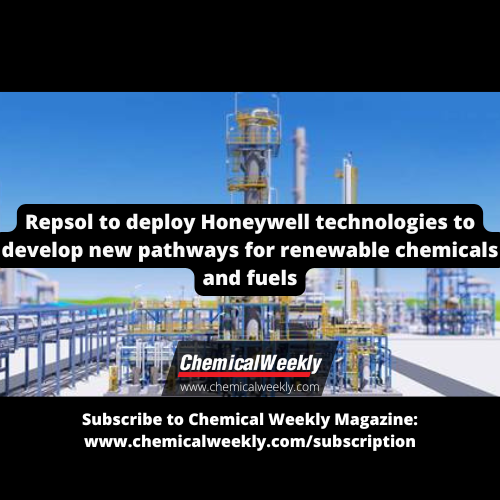
Honeywell and Spanish energy major, Repsol, have announced a collaboration to create new production pathways for biofuels and circular materials. The two will also explore the possible integration of these methods into Repsol’s existing facilities.
The companies plan to scale and commercialise Honeywell’s technologies, which use various wastes like fats, oils, greases, biomass and solids for chemical production and renewable fuels at Repsol’s refineries. Their goal is to produce different biofuels, including sustainable aviation fuel (SAF) and renewable diesel, while making use of existing refinery assets.
“As a global leader in sustainable fuel technologies, we seek collaborations to provide innovative solutions that help our customers and stakeholders to reduce carbon and greenhouse gas emissions through biofuel production,” said Mr. Bryan Glover, Chief Growth Officer and CTO of Honeywell Energy and Sustainability Solutions. “Our collaboration with Repsol illustrates how Honeywell can apply new technologies to reduce carbon emissions while producing biofuels and advanced materials leveraging current refinery infrastructure,” he added.
Repsol is also analysing the deployment of Honeywell’s UpCycle process technology, which turns waste plastic into ‘Honeywell Recycled Polymer Feedstock’ for new plastics. It can recycle diverse plastics like coloured, flexible, multilayered packaging and polystyrene. When used in conjunction with other chemical and mechanical recycling processes - along with improvements to collection and sorting - Honeywell’s UpCycle process technology has the potential to help create the capability to recycle nearly 90% of waste plastics. This would represent a considerable increase in the amount of waste plastics that can be turned into polymer feedstock.
“Renewable fuels and plastics recycling are crucial to Repsol’s commitment to achieve net zero emissions by 2050,” said Ms. Berta Cabello, Repsol’s Director of Renewable Fuels. “Our collaboration with Honeywell to advance and adopt cutting-edge technologies will help us reduce our carbon footprint and become a benchmark in renewable fuels and hydrogen production by 2030,” she added.
The two companies have a history of successful cooperation in various areas, such as licensing and developing petrochemical units, catalysts, technical support and troubleshooting, digitalisation and technology. In 2023, Repsol selected Honeywell’s Ecofining technology to make renewable fuels from sources like used cooking oil and waste animal fat at its plant in Puertollano, Spain. This technology was developed and commercialised jointly by Honeywell in collaboration with Italy’s Eni. Repsol is building this plant to produce about 240,000 metric tons per annum of renewable diesel and other products.