
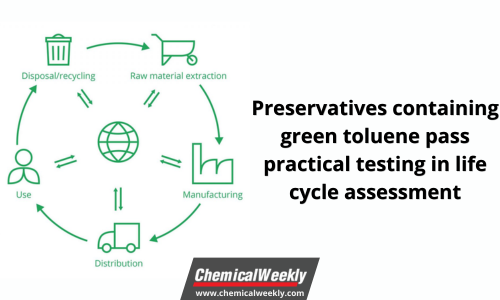
LANXESS highlights how Life Cycle Assessment (LCA) provides a broader view of sustainability than carbon footprint calculations alone. Using Purox S Scopeblue sodium benzoate as an example, the study demonstrates how replacing conventional toluene with “green” toluene derived from used cooking oil significantly improves environmental performance across multiple sustainability categories. The product shows lower impacts in areas such as resource use and acidification while maintaining a substantially reduced CO₂ footprint. Although modest trade-offs are observed in eutrophication and land-use indicators, overall performance remains highly favourable compared to conventional and plant-based alternatives. The findings reinforce the growing importance of holistic sustainability assessments across the chemical, personal care, pharmaceutical, and food industries.
 Back
 5 November, 2026 18:20:00 IST
Preservatives containing green toluene pass practical testing in life cycle assessment
Other News

16 November, 2026 17:55:11 IST
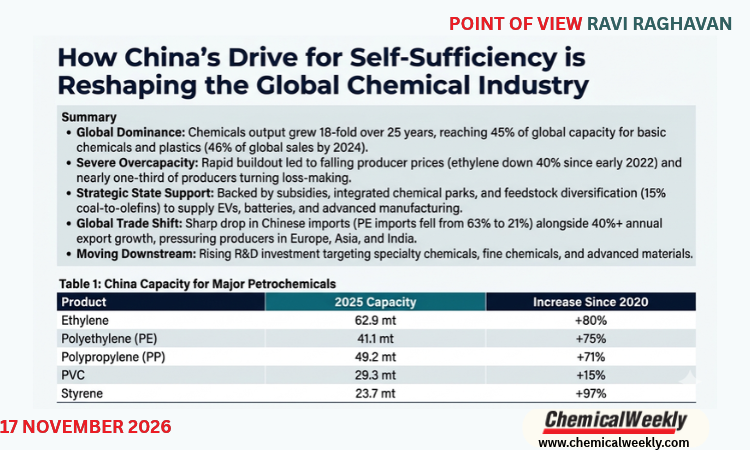
How China’s drive for self-sufficiency is reshaping the global chemical industry
For much of the past two decades, China has been building the world’s most ambitious chemicals...

17 November, 2026 16:33:24 IST
Chemexcil’s first overseas warehouse opens in Jafza, Dubai
India’s first overseas chemical warehouse has opened in the Jebel Ali Free Zone (Jafza) in Dubai,...
PRINT EDITION
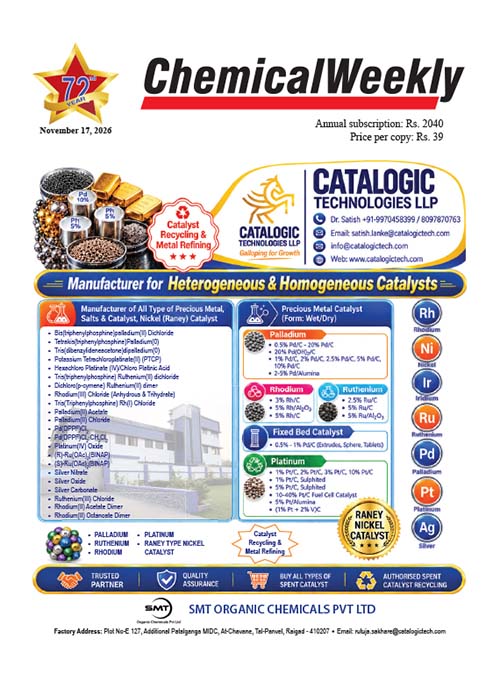




Nov 17, 2026
View Digital Issue
Download Issue
View Past Issues
Search For
Exhibitions & Conferences



Watch




OTHER PUBLICATIONS

DATABASES
