
 14 June, 2024 16:26:20 IST
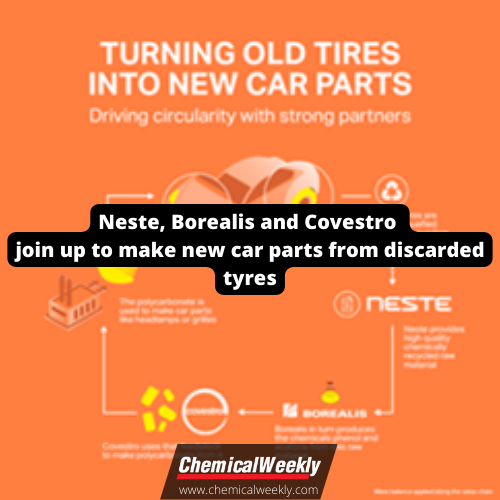
European chemical firms - Neste, Borealis and Covestro - have signed a project agreement to enable the recycling of discarded tyres into plastics for automotive applications.
When no longer fit for use, tyres are liquefied by means of chemical recycling and then processed into base chemicals and further into polycarbonates of high purity. These can then be used in various automotive applications, from parts of headlamps to radiator grilles.
“Circularity requires cooperation, and this cooperation with our partners Neste and Borealis is testament to the possibilities at our disposal,” said Mr. Guido Naberfeld, Senior Vice President, Head of Sales and Market Development Mobility at Covestro. “We are creating options to turn discarded materials from cars into new car parts again. With that, we are supporting our automotive customers and addressing an increasingly prominent question discussed across the value chain: How to match high-performance materials with recycled content? Projects like this can be the answer,” he added.
As part of the collaboration, Finland-based Neste turns liquefied discarded tyres into a high-quality raw material for polymers & chemicals manufacturing and supplies it to Austria’s Borealis. Borealis then process the Neste-produced raw material into base chemicals, phenol and acetone, which are supplied to Germany’s Covestro. Covestro can use these materials to make polycarbonates. The share of recycled content is attributed via the mass balancing approach all the way to the final products using ‘ISCC Plus’ certification.
The first products based on the collaboration are already available as each party has manufactured the first batch of their respective contribution to the project. Aside from polycarbonates, the project partners may also consider polyurethanes as a possible end product, which could also find its way into parts of the interior of a car.