
 17 May, 2024 15:02:41 IST
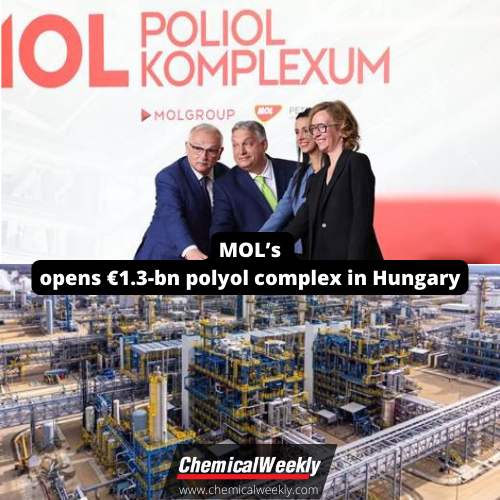
MOL, the Hungarian energy and petrochemicals major, has opened its new polyol complex in Tiszaújváros (Hungary). The Euro 1.3-bn project is MOL’s “largest organic investment” and boasts a capacity of around 200,000 tonnes per annum.
“The polyol complex will significantly strengthen our company’s position and competitiveness, with the entire value chain from petroleum processing to polyol production. This investment has put Tiszaújváros back on the map of the European chemical industry, making it one of the most important industrial centres in the region. It will enhance the industrial competitiveness of our country and could catalyse economic growth as well,” said Mr. Zsolt Hernádi, Chairman and CEO of MOL Group said at the inauguration.
MOL, thyssenkrupp and Evonik IP had signed the licence agreement in 2017, and the foundation stone of the complex was laid in September 2019.
The main units were transported to Tiszaújváros between 2019 and 2020, and were followed by the completion of the complex’s hydrogen peroxide, propylene oxide, polyol and propylene glycol plants. In addition to the four main plants, a pilot polyol plant, a quality assurance laboratory and, in Százhalombatta, a R&D centre were also built.
The project involved an international team of thousands of experts, with engineering design work carried out in Germany, Thailand, India and Hungary. The plant equipment came from 24 countries. The Hungarian government contributed with Euro 131.5-mn to the project: a €93.6-mn corporate tax credit, which can be claimed once the investment is operational, and a €37.9-mn investment grant based on an individual government decision.
According to MOL’s calculations, the plant will contribute nearly Euro 150-mn annually to the MOL Group’s financial results.
MOL Group has been strengthening its chemical business for almost ten years: the new butadiene extraction plant was completed in 2015 with a HUF 35-bn ($98-mn) investment, followed by the synthetic rubber (S-SBR) plant in 2018 with a HUF 100-bn ($280-mn) investment.
In 2016, the company announced a major strategic shift to prepare for the energy transition and the post-fossil fuel world by expanding its portfolio. As part of the third and largest wave of investment in the petrochemicals business, next to the polyol complex, the polypropylene plant is the most important element, which is a HUF 65-bn ($182-mn) investment, and there are nearly Euro 2-bn of life cycle investments that will secure the long-term future of the chemicals business.