30 December, 2025 17:04:20 IST
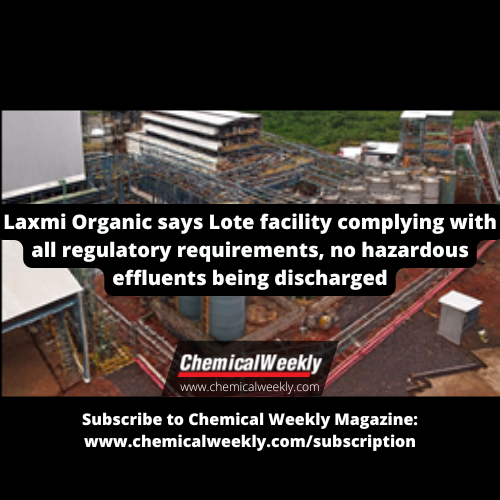
Chemicals firm, Laxmi Organic Industries Ltd (LOIL), has released a press statement informing that its Lote facility at the Lote Parshuram Maharashtra Industrial Development Corporation (MIDC) zone, operates in compliance with applicable Indian environmental, safety and regulatory requirements and has received all statutory approvals since inception.
“All process emissions and effluents are scientifically treated and appropriately disposed at a State Government approved facility,” the company said adding that there is “no discharge of hazardous effluents in the environment from the Lote facility”.
The announcement was in response to various allegations by political parties and social media activists regarding environment issues at the site. It has been alleged that Laxmi Organic has been producing PFAS (per- and polyfluoroalkyl substances) or the so-called ‘forever chemicals’ since early 2025, with equipment, patents, and production technology acquired from the former Miteni plant in Vicenza, Italy, which was shut down in 2018 after being linked to significant groundwater contamination and health issues. Former executives of the Italian plant were convicted of environmental devastation charges in an Italian court in 2024.
Laxmi Organics, through its subsidiary Viva Lifesciences, acquired the decommissioned Italian plant’s assets and shipped them to India.
In the press note, LOIL has emphasised that comparisons between its Lote operations and those of Miteni are “inaccurate and misleading from perspectives of effluent treatment and disposal practices and product portfolio”.
The Miteni incident involved the direct discharge of wastewater into rivers over several decades, leading to significant environmental and health impacts, said the company. Such practices are not permissible under India’s stringent regulatory framework, which mandates rigorous environmental clearances, continuous monitoring and strict compliance standards, it added.
The company said the Lote manufacturing facility at Chiplun operates closed-loop systems that prevent the release of any harmful substances into the environment. The hazardous waste and effluents are sent to a State government-approved common hazardous waste treatment storage disposal facility, where they are scientifically disposed, including incineration, said the company.