
 14 August, 2026 14:45:09 IST
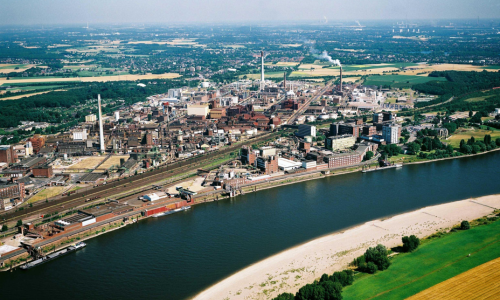
German speciality chemicals company, Lanxess, said it will use hydrogen instead of natural gas to dry its iron oxide pigments at its Krefeld-Uerdingen site in Germany
“This will make the spray dryer one of the first large-scale industrial plants in Germany to use hydrogen as a fuel in continuous operation,” the company said. The hydrogen is produced during chlorine electrolysis at the neighbouring Covestro plant and transported directly to the Lanxess plant via a pipeline. The initiative will help the company reduce its carbon footprint by about 6,000 metric tons per year.
“Switching from a natural gas burner to a hydrogen burner is a significant technological step towards low-greenhouse-gas processes,” said Mr. Michael Ertl, Head of the Inorganic Pigments business unit at Lanxess. “We are proving that decarbonising industry works not only in pilot projects, but also in the day-to-day operation of large production facilities.”
Lanxess installed the hydrogen burner at the end of 2025 and has gradually brought it online since then. The system is designed to be powered entirely by hydrogen. Technical integration includes a dedicated hydrogen line, an adapted burner, and measurement control technology, as well as additional safety and control systems.
“The project shows that industrial partners at a Verbund site can particularly successfully shape the transition to climate-friendly production,” said Mr. Rob Eek, Production Manager at Covestro in Krefeld-Uerdingen.
The Verbund site’s close integration is the basis for this success - short pipeline routes, shared infrastructure, and established safety concepts ensure a reliable hydrogen supply.
Lanxess and Covestro have a long-standing partnership at the Krefeld-Uerdingen site. Covestro supplies nitrobenzene, which Lanxess uses to produce its iron oxide pigments. Aniline is produced as a byproduct of this process, which is then returned to Covestro as an important raw material for plastics production. The recently implemented use of hydrogen in the spray dryer adds an additional climate-relevant component to the established production partnership.
In Krefeld-Uerdingen, Lanxess operates the world’s largest production facility for iron oxide pigments, which have been manufactured at this site for 100 years now.