
 30 January, 2024 17:16:26 IST
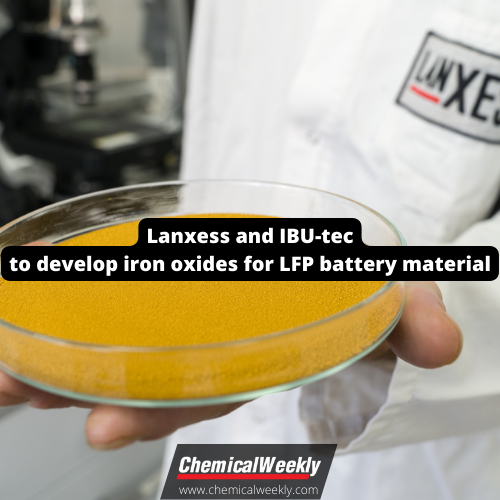
German firms - speciality chemicals company Lanxess and battery materials manufacturer, IBU-tec, - have entered into a research cooperation in the battery sector. The goal of the two companies is to develop innovative iron oxides for the production of cathode material for LFP batteries and thus increase the performance of this battery type. The companies aim to optimize the electrochemical properties of LFP batteries, such as energy density, charging speed and number of charging cycles.
More and more car manufacturers are increasingly relying on LFP (lithium/iron/phosphate) batteries for their e-vehicles - especially for volume models. Compared to NMC (nickel/manganese/cobalt oxide) and NCA (nickel/cobalt/aluminum oxide) cell chemistry systems, LFP technology offers cost advantages of up to 50 percent and promises safer use, as the system makes the batteries virtually impossible to ignite.
European value chains
The demand for LFP in Europe is expected to grow by 20 percent per year until 2030. So far, however, this demand has been met almost exclusively by non-European suppliers. With their development, both companies aim to contribute to the establishment of an independent, robust value chain in the European LFP battery market, while at the same time reducing the carbon footprint of batteries.
IBU-tec is currently the only European manufacturer of LFP cathode material, while Lanxess operates the world’s largest plant for the key raw material, iron oxide, in Krefeld-Uerdingen (Germany).
Mr. Jörg Leinenbach, CEO of IBU-tec, commented, “With the joint product development we will combine our expertise and together we will drive the development of the European LFP battery market and establish an independent value chain. We see this cooperation as an important step towards opening up the market.”