25 August, 2026 16:41:21 IST
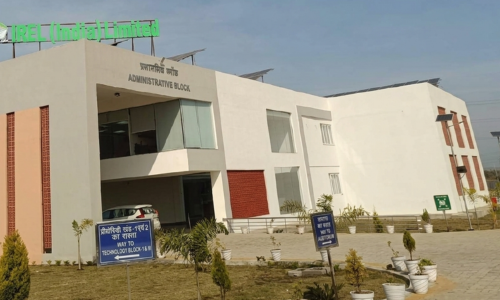
Mumbai-based IREL (India) Ltd., a public sector undertaking under the Department of Atomic Energy, has invited entrepreneurs, startups and industries to commercialise seven indigenous technologies covering rare-earth materials and titanium, as per a notification uploaded on its website.
The technologies have been developed and demonstrated at IREL’s Rare Earth & Titanium Theme Park (RETTP) in Bhopal, Madhya Pradesh, which was inaugurated on May 10, 2026, and is designed to bridge the gap between laboratory-scale research and commercial-scale manufacturing.
This is the first time the PSU has released such a large suite of technologies under a single programme, signalling a shift toward wider industry participation in rare‑earth processing, separation and downstream value addition.
The seven technologies on offer are production processes for lanthanum, cerium and neodymium metal; recovery of neodymium and praseodymium (NdPr) from end-of-life NdFeB permanent magnets; manufacturing processes for lamp phosphor and LED phosphor; and titanium sponge production, as per the notification.
Lanthanum is used in rechargeable batteries, petroleum-refining catalysts, optical glass and electronics, while cerium finds application in glass polishing, automotive catalytic converters and industrial catalysts. Neodymium is a key input for high-strength permanent magnets used in electric vehicle motors, wind turbines, robotics, defence equipment and aerospace systems.
The NdPr recovery technology establishes a circular-economy route from discarded NdFeB magnets back to raw material for new magnet production. IREL said it has already set up a rare-earth recycling facility at the Bhopal Park for this purpose. The lamp and LED phosphor technologies cover rare-earth phosphors used to convert electrical or ultraviolet energy into visible light for fluorescent lamps, displays and electronic lighting, while titanium sponge serves as feedstock for titanium metal and alloys used in aerospace structures, missile systems, marine applications and chemical processing.
IREL said each technology had been successfully demonstrated at pilot scale and was available for transfer to entrepreneurs seeking to establish standalone manufacturing facilities or integrated value chains spanning raw materials, metal production, recycling, alloy manufacturing and downstream products. Plant configurations can be customised for annual production capacity, feedstock availability, automation level, utility and infrastructure requirements, and market demand, allowing entrepreneurs to start at an optimal scale and expand as demand grows, the company said.
The technology transfer package will include process know-how and operating methodology, basic engineering packages and process flow diagrams, equipment specifications, quality assurance protocols, product characterisation methodology, material handling and safety guidelines, and training for technical personnel and plant operators, the IREL notification stated.
Interested entrepreneurs are required to submit a prescribed application form along with supporting documents; applicants found suitable will be invited to sign a Memorandum of Agreement with IREL, followed by a Non-Disclosure Agreement to enable the confidential exchange of technical information during the transfer process.
The initiative comes as India seeks to build capabilities across the critical minerals value chain beyond mining and processing, moving into higher-value materials, permanent magnets and strategic industrial products. According to government estimates, India holds approximately 7.23-million tonnes of in-situ rare-earth oxide equivalent resources in monazite-bearing beach-sand deposits, but has identified inadequate midstream and downstream industry as a key constraint in the value chain. Monazite, a key rare-earth source mineral, is regulated under India’s atomic energy framework.
The NdPr recovery technology in particular could support the development of a domestic permanent-magnet manufacturing ecosystem under the government’s Rs. 7,280-crore Scheme to Promote Manufacturing of Sintered Rare Earth Permanent Magnets, as per industry experts. The scheme aims to establish 6,000-tonnes-per-annum of integrated NdFeB permanent-magnet manufacturing capacity through five beneficiaries, building an integrated value chain from NdPr oxide to finished magnets to reduce India’s import dependence. The heavy industries ministry received 20 bids for the scheme when bids were opened on August 13, with Larsen & Toubro, Coal India and ReNew among the bidders.