10 August, 2026 17:43:43 IST
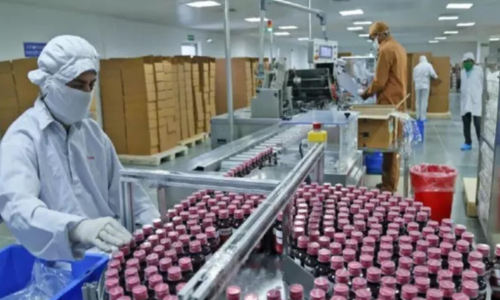
New Delhi-based The Udaiti Foundation has released a report, “Gender-Smart Manufacturing: A Leadership Playbook for Building Inclusive Shopfloors,” examining the gap between women’s presence in the pharma talent pipeline and their limited representation on the manufacturing floor. The playbook draws on discussions with industry leaders and shopfloor workers as well as field visits across India’s pharmaceutical manufacturing clusters, and sets out a roadmap for building more inclusive shopfloors.
India’s pharmaceutical sector, the world’s largest supplier of generic drugs and a major global vaccine supplier, is projected to grow to around $130-bn by 2030. Supported by policy measures such as the Rs. 10,000-crore Biopharma SHAKTI scheme and Production Linked Incentive schemes, the sector is expected to add more manufacturing capacity over the next five years than it did in the preceding decade.
Ms. Pooja Sharma Goyal, Founding CEO of The Udaiti Foundation, said the pharma sector’s global standing rested on precision, discipline, and process excellence, yet women remained underrepresented within it. She noted that women’s representation in NSE-listed pharma companies had risen from 8% to 12% over the last five years, but that women still accounted for only 12% of the manufacturing workforce. She added that while gender diversity was a stated priority for 73% of hiring managers, only 21% had a clear internal strategy to act on it, and that companies building inclusive shopfloors early would be better placed to lead the sector’s next phase of growth.
The playbook sets out three areas for moving women beyond packaging and quality roles into core functions such as production, maintenance, engineering, and frontline supervision. On recruitment and training, it cites Dr. Reddy’s Laboratories’ SMT Programme, which offers free education and hostel facilities to local candidates, and Cipla’s Neev Programme, which combines technical training with paid work and recorded a 34% female cohort in 2023-24.
On retention, it highlighted Hindustan Unilever’s Partnership Workshops, which have driven near-zero attrition among women workers through shared-purpose sessions and improved medical and care support, and to Dr. Reddy’s bridge courses that help women move from packaging and quality roles into core shopfloor functions.
On workplace norms and infrastructure, the report noted Tata Motors’ Omega Line, which redesigned workstation layouts and introduced semi-automation to better suit its workforce, and Good Business Labs’ STITCH programme, a supervisor-training intervention that delivered a 15% reduction in worker turnover and a 7.3% improvement in line efficiency.
The report positions pharma manufacturing as evidence that these barriers are solvable, and suggests its practices could inform similar change in auto components, electronics, chemicals, and food processing, sectors where women remain concentrated in narrow roles or excluded from core shopfloor functions.