
 1 August, 2025 16:53:01 IST
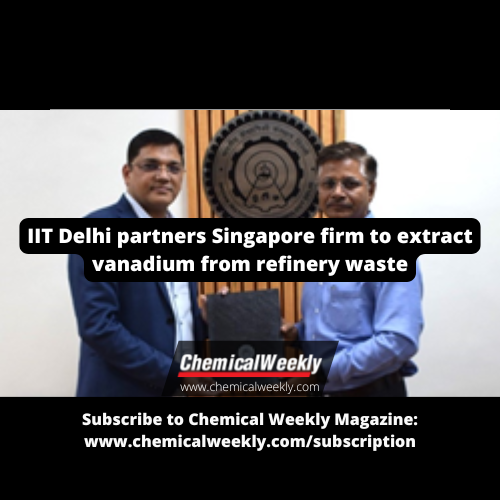
Singapore-based energy storage specialist, VFlowTech, and Foundation for Innovation and Technology Transfer (FITT) have entered into a partnership for research into recovering high-purity vanadium from petroleum coke (petcoke) cinder, a by-product of refining industry. The FITT is an industry interface of the Indian Institute of Technology Delhi (IIT Delhi). The initiative aims to establish India’s first circular vanadium ecosystem, converting refinery waste into battery-grade vanadium pentoxide (V₂O₅) - a critical material used in next-generation long-duration batteries that support grid stability and renewable energy deployment, a VFlowTech statement said.
Backed by its recent $20-mn Series A+ funding, VFlowTech said it is investing in India’s clean energy future by advancing local research and development capabilities, and supporting a ‘Made-in-India’ vanadium value chain for vanadium redox flow batteries (VRFBs).
“India’s refinery scale presents a unique opportunity to build a home-grown vanadium ecosystem. By repurposing waste into battery materials, we are addressing energy security and industrial sustainability in one step,” said Mr. Avishek Kumar, co-founder and CEO of VFlowTech.
The waste from the refineries produces large amounts of petcoke cinder, which contains significant vanadium content. This collaboration will fill that gap by extracting vanadium domestically from petcoke waste, advancing both economic and environmental sustainability.
“By establishing India’s first circular vanadium ecosystem, we aim to support the vision of creating renewable energy capacity of 500-GW by 2030,” said Mr. Anil Verma from the Department of Chemical Engineering at IIT Delhi.
As per the industry estimates, the global VRFB manufacturing market is on the verge of robust growth between 2025 and 2030 at a compound annual growth rate (CAGR) of approximately 20-25 percent. Industry projections highlight that the revenue from VRFB manufacturing will surpass $2-bn by 2030.