21 July, 2026 15:45:55 IST
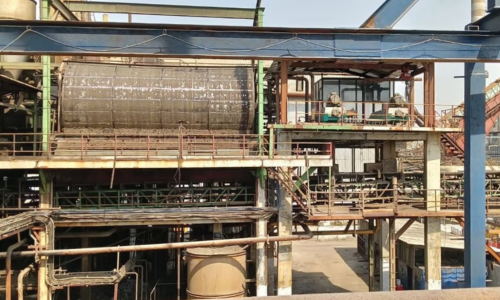
GEA has entered a strategic partnership with India‑based Chemical Systems Technologies (CST) to speed up global adoption of decanter centrifuges for sugar‑mud dewatering. The collaboration combines GEA’s separation technology and global reach with CST’s process expertise to help mills upgrade existing systems and improve total cost of ownership.
With profitability and resource efficiency under pressure, decanter‑based dewatering is emerging as a key lever for sugar recovery. GEA decanters are already proven across industrial separation, and field results show clear advantages over conventional systems.
Replacing conventional dewatering systems
Sugar‑mud dewatering traditionally relies on rotary vacuum drum filters (RVDF) or belt presses, both of which consume high water and steam, depend on filter aids, cause product losses and require labour‑intensive operation. Decanters offer a continuous, closed‑process alternative, reducing complexity and improving resource efficiency. Concentrated mud (10-20% of process flow) is fed directly to the decanter, which continuously separates solids and centrate; the centrate is returned to the process.
Yield improvement
CST’s field data from nearly 50 installations across India (3,500-18,000 TCD) show up to 60% lower product losses versus RVDFs and up to 25% lower losses versus belt presses. Average sugar loss in cake drops to 0.03% on cane with decanters, compared with 0.07% using RVDFs. For a 10,000 TCD mill, this equates to ~600 additional tonnes of recoverable sugar per 150‑day season.
Decanters operate as closed systems, reducing temperature drop to 2-5°C, compared with 20-30°C in open systems. Water consumption falls sharply: RVDFs require ~6% water on cane, belt presses ~8%, while decanters eliminate wash‑water needs. Steam demand also drops – RVDFs typically require ~1% steam on cane, belt presses ~1.2%, while decanters add none. The closed, high‑temperature stage also reduces microbial activity and improves purity.