
 9 October, 2026 16:17:17 IST
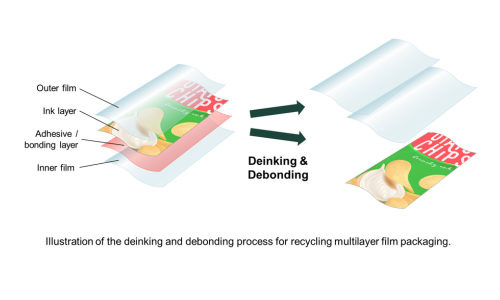
Japan-based printing ink makers DIC Corporation and artience Group, acting through its packaging solutions subsidiary Toyo Ink Co., Ltd., have jointly developed what they describe as the first common industry protocol for evaluating deinking and debonding in the material recycling of flexible film packaging in Japan. The protocol standardises test procedures, evaluation criteria and reporting formats, so that converters, brand owners and recyclers can compare recyclability on shared domestic standards.
The companies said flexible packaging, widely used in food, daily necessities and pharmaceuticals, is made of multiple materials such as films, printing inks and laminating adhesives. Removing the printed ink (deinking) and separating the layered films (debonding) are therefore critical for high-quality material recycling. Until now, these evaluations in Japan were done under each company’s own test conditions and criteria, which made results hard to compare across companies or materials. The companies said this also hindered recyclability assessment at the design stage and the sharing of information along the supply chain. They also noted that the Japanese government has positioned the circular economy as a key growth strategy, and that demand is rising for packaging designs that are easier to recycle and for more high-quality recycled plastics.
By pooling expertise in printing inks, laminating adhesives, and recycling technologies, the companies have established a standard consisting of three core elements. The first covers test procedures, setting out equipment, test conditions, material handling and operational steps to improve reproducibility in Japanese testing environments. The second is a set of evaluation criteria for deinking and debonding efficiency and for the quality of the recycled plastic. The third is a unified reporting format for test conditions and results.
DIC and artience said converters can use it to select printing and processing conditions and materials that favour recyclability. Brand owners can pick highly recyclable packaging materials on objective data, and recyclers can set processing conditions to suit material characteristics, which should improve recycled plastic quality.
The two companies will keep refining the protocol using inputs from actual packaging materials and recycling processes in Japan. They have invited industry stakeholders in Japan to adopt it, with the aim of making it the standard for recyclability assessment in flexible packaging.