
 27 February, 2026 14:51:45 IST
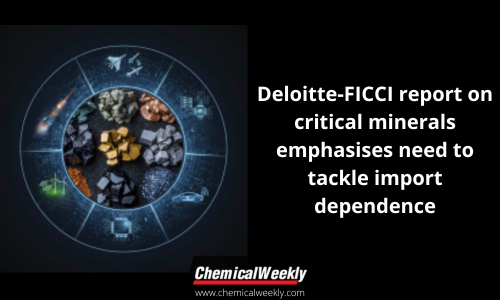
A new report jointly released by FICCI and Deloitte has highlighted the nation’s high import dependence and supply chain vulnerabilities in critical minerals and rare earth elements (REE).
As the nation targets 500-GW of renewable capacity, 30 percent EV penetration by 2030, and net-zero emissions by 2070, minerals such as lithium, nickel, cobalt, graphite, copper, and rare earths emerge as indispensable. Yet import dependence remains stark: lithium, cobalt, and nickel are entirely imported, copper imports exceed 90 percent, and natural graphite imports stand at 60 percent. Despite geological potential, India’s domestic production and processing capacity remain far from sufficient, the report stated.
The report highlights how decarbonisation, electric mobility, and advanced manufacturing are intensifying mineral demand, with lithium, graphite, and nickel seeing the fastest global acceleration. Supply chain vulnerabilities add further pressure, as mining and refining are concentrated in a handful of countries, exposing India to geopolitical risks and price volatility. Midstream processing - battery-grade chemicals, magnet materials, and rare earth separation - remains India’s principal constraint, leading to continued external dependency.
Rare earth elements such as neodymium and praseodymium are especially strategic, powering permanent magnets for EV motors and wind turbines. With nearly 80 percent of REE consumption tied to magnets, India’s limited refining and magnet manufacturing capacity reinforces its reliance on imports.
The way forward, according to the report, lies in accelerated exploration, domestic processing hubs, overseas asset acquisition, recycling, and embedding ESG standards. Effective execution under the National Critical Mineral Mission could transform India from an import-dependent player into a resilient, value-added participant in global clean technology supply chains, it added.