31 August, 2026 17:04:54 IST
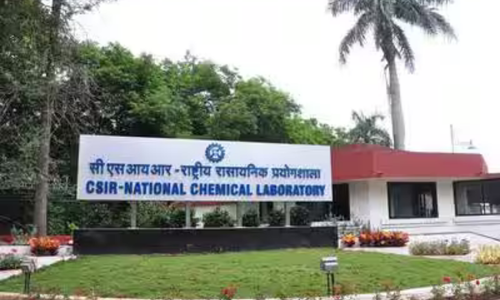
Scientists at CSIR-National Chemical Laboratory (CSIR-NCL), Pune, have developed an electrochemical method to break down polyurethane (PU) – one of the most difficult plastics to recycle because of its highly stable carbamate backbone.
The work, carried out by Adarsh Singh and Ramesh C. Samant of CSIR-NCL’s Organic Chemistry Division, has been published in Angewandte Chemie International Edition.
PU is widely used in flexible pipes, coatings, foams, mobile covers and a range of soft and rigid materials. Its chemical stability makes conventional recycling challenging: chemical depolymerisation often requires temperatures above 150°C; hydrogen‑based routes demand high pressure; and several methods rely on expensive metal catalysts such as ruthenium or iridium. Mechanical recycling, meanwhile, typically downgrades material quality.
The new method replaces these harsh conditions with an electrochemical reaction operating at around 60°C, using magnesium as anode, platinum as cathode, and a controlled current. The process successfully converted the carbamate component of PU into urea compounds, with yields ranging from 67% to 94%, depending on the amine used.
Crucially, the researchers demonstrated that the method can do more than simply break PU; it can also create new C-N, C-P and C-C bonds, opening the possibility of transforming waste PU into useful chemical intermediates. Tests on commercial PU samples achieved 70-77% breakdown, producing urea derivatives and alcohols. Everyday products such as flexible pipes and mobile covers were also tested; despite the presence of additives and mixed polymers, the method achieved up to 84% breakdown in a mobile‑cover sample.
The team further explored whether PU could be chemically modified rather than fully depolymerised. In one experiment using hexamethylenediamine, about 17% of urethane bonds were converted into urea bonds, suggesting future pathways for polymer upcycling – modifying waste polymers to create materials with new properties.
The researchers believe the electrochemical approach could offer a lower‑temperature, catalyst‑free and potentially more sustainable route for dealing with PU waste, though further development is needed before industrial‑scale recycling becomes feasible.