24 July, 2026 15:51:33 IST
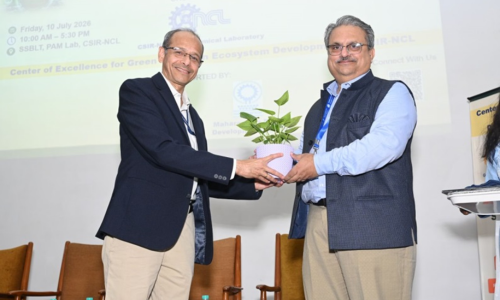
The Center of Excellence (CoE) in Green Hydrogen Ecosystem Development at CSIR-National Chemical Laboratory (CSIR-NCL), Pune, convened a stakeholder meeting to advance Maharashtra’s green hydrogen ecosystem, bringing together policymakers, industry leaders, researchers, startups, regulators and Hydrogen Valley representatives from across India. The event was supported by the Maharashtra Energy Development Agency (MEDA) and the Government of Maharashtra.
The meeting drew 110 stakeholders, including 42 industry participants, 11 academic and R&D institutions, 12 startups, eight government representatives, and four Hydrogen Valleys, underscoring the growing momentum behind India’s green hydrogen mission.
Need for coordinated action
Welcoming participants, Dr. Ashish Lele, Director, CSIR-NCL, highlighted India’s energy security challenges and the urgency of scaling clean energy alternatives. While hydrogen has immense potential as a clean fuel, he highlighted several technical and economic challenges, including energy-intensive production, storage and transportation difficulties due to hysrogen’s low volumetric energy density, and the high cost of deployment.
Dr. Lele stressed the need for indigenous electrolyser manufacturing, continuous innovation and strong collaboration across government, industry and academia.
‘Bio-hydrogen can boost farmer incomes’
Dr. Prashant Dhakephalkar, Director, Agharkar Research Institute (ARI), emphasized the potential of biohydrogen as a clean fuel and industrial feedstock, noting opportunities to utilize agricultural residues and industrial biomass waste.
He discussed challenges related to biomass pretreatment, microbial strain improvement, and enzyme development, and emphasized that biohydrogen production can provide an additional source of income for farmers by utilizing crop residues that are otherwise burnt, thereby contributing to both clean energy generation and environmental sustainability.
‘Economics must be evaluated through the lens of long-term energy security’
Delivering the keynote address, Dr. Prasad Chaphekar, Director, Ministry of New and Renewable Energy (MNRE), said green hydrogen economics must be evaluated through the lens of long-term energy security, geopolitical risks and market volatility. He highlighted India’s progress under the National Green Hydrogen Mission (NGHM) and growing confidence in hydrogen despite a slowdown in global project announcements.
Policy, financing and priority sectors
Mr. Amol Bansode, General Manager (Projects), Maharashtra Energy Development Agency (MEDA), presented Maharashtra’s Green Hydrogen Policy, detailing incentives, subsidies and the State’s roadmap for building a robust hydrogen ecosystem spanning industrial decarbonisation, mobility, research, skill development and infrastructure.
A panel featuring leaders from KPIT, Hygenco, Automotive Research Association of India (ARAI), H2E Power, Tata Steel and Deepak Fertilisers discussed commercialization challenges, financing needs and sectoral opportunities.
“Commercial vehicles, shipping and aviation offer the strongest business case for hydrogen adoption,” KPIT’s Vice President, Mr. Tejas Kshatriya noted, stressing the importance of government subsidies and investments in hydrogen refuelling infrastructure.
Mr. Kiran Shetty, Head – Project Development & Public Policy, Hygenco, called for Green Hydrogen Purchase Obligations (GHPOs) to create sustained demand.
Dr. Sushil Ramdasi, Deputy Director, ARAI, emphasized the need to reduce capital expenditure and hydrogen storage costs to improve commercial viability. He identified commercial mobility, agricultural tractors, and the fishing sector as high-potential applications and recommended decentralized hydrogen generation to support efficient fuel distribution.
Mr. Siddharth Mayur, CEO, H2E Power, stated that by 2036, agriculture could require nearly 96-GW of electrolysis capacity to meet its hydrogen demand, making it one of the major markets for green hydrogen.
Dr. Siddhartha Misra, Chief, Process Research, Tata Steel, discussed the potential of green hydrogen as a sustainable reducing agent for steel production. While current injection levels are limited, global adoption could potentially require 50-60 mt of hydrogen annually, he noted.
Hydrogen Valleys and emerging applications
Dr. Prashant Singh, CEO, Odisha Hydrogen Valley Foundation (OHVF), outlined plans for DRI production using green hydrogen, starting with a 100 kg/day pilot, scaling to 2-5 tonnes/day. He also discussed the feasibility of 20% hydrogen blending in mining trucks to reduce emissions and emphasized decarbonization of the coal, steel, aluminium, and cement industries.
Dr. Prashant Kumar Gupta, Assistant Professor, IIT Jodhpur, highlighted Rajasthan’s solar advantage and comparatively lower renewable electricity costs, while stressing the need for viability gap funding.
Dr. Vishnu Budama, CEO, Pune Hydrogen Valley Innovation Cluster (PHVIC), highlighted Pune’s role as the western Hydrogen Valley focusing on specialty chemicals and mobility.
Mr. K. Premkumar Scientist, ANERT, presented the Kerala Hydrogen Valley initiative, highlighting hydrogen-powered water transport systems, airport feeder services, biomass-based hydrogen production, research collaborations in catalyst development, and hydrogen blending in city gas networks.
Hydrogen in chemical industry, dairy, and data centres
Mr. Ravi Raghavan, Editor, Chemical Weekly, noted that the chemical industry is one of the strongest candidates for early green hydrogen adoption because hydrogen cannot be substituted in many chemical processes. He further observed that 10-15 MW green hydrogen plants are well suited to meet the hydrogen requirements of many chemical manufacturing facilities. Additionally, he pointed out that while Gujarat benefits from chlor-alkali hydrogen production, Maharashtra largely imports hydrogen, creating an opportunity for establishing green hydrogen production in the State.
Mr. Vishvas Chitale, CEO, Chitale Dairy, discussed the potential of green hydrogen in the dairy sector –from milk collection and chilling to processing, cold storage, and distribution. Dairy operations, he noted, require both heating and cooling, with an average energy demand of 7-8 MW per day, and green hydrogen offers a clean energy solution.
Mr. Seeta Nookala, Quantinuum India, highlighted the unprecedented growth in electricity demand from data centres, and advocated use of hydrogen as a clean buffer energy source capable of stabilizing power supply, replacing diesel generator sets, and eventually reducing dependence on batteries.
Skill development: urgent need for hydrogen workforce
An open discussion stressed the need for industry-oriented training, hydrogen safety awareness, stronger academia-industry partnerships and structured skill-development programmes.
Dr. Magesh Nandagopal, Project Leader, CoE, Green Hydrogen Ecosystem Development, CSIR-NCL, highlighted the importance of sustained collaboration among government, industry, academia, and research institutions to accelerate the deployment of green hydrogen technologies.