
 30 April, 2024 16:33:12 IST
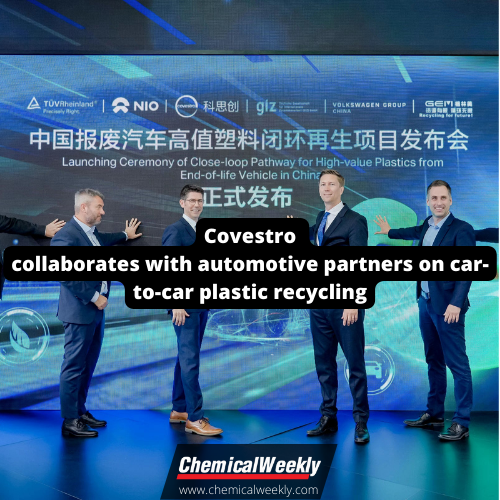
With increasing global environmental awareness and stricter regulatory requirements, the automotive industry is realizing the necessity of plastic recycling for sustainable development. In response, materials manufacturer Covestro, along with partners from the automotive value chain, is spearheading the concept of car-to-car closed-loop plastics recycling, which is emerging as a promising solution to tackle the challenges of plastic waste management in the sector.
Under a joint pilot program initiated by German federal enterprise GIZ (Deutsche Gesellschaft für Internationale Zusammenarbeit), Covestro and partners will collaborate to establish closed-loop pathways for high-value plastics from end-of-life vehicles (ELVs). The goal is to create an efficient and sustainable automotive plastic recycling system, advancing the more sustainable “transformation of the industry”.
The pilot program was announced at Covestro’s booth during the CHINAPLAS 2024 international trade fair in Shanghai. Notable partners include leading automotive brand owners such as NIO of China and Volkswagen, Chinese recycling company GEM, and third-party certification bodies like TÜV Rheinland.
“By leveraging our collective strengths and resources, we are confident in our ability to build a closed-loop for automotive plastics recycling, thereby reducing waste and carbon emissions at the source while improving resource use efficiency. Through this joint program, we aim to expedite the automotive industry’s transition toward a more climate-neutral and sustainable future,” said Ms. Lily Wang, Global Head of the Engineering Plastics Business Entity at Covestro.
Polycarbonate recycling
As part of the pilot programme, a team of professionals will explore methods to recycle and process waste polycarbonate components, such as end-of-life car headlights, into post-consumer recycled (PCR) polycarbonates. The recycled materials will then be reused for various interior and exterior vehicle applications, saving resources and reducing carbon emissions.
This could offer urgently needed long-term solutions for the automotive manufacturing industry, which seeks high-quality PCR materials that are compliant and high-performance amid increasingly stringent regulations. For example, in 2023, the European Commission proposed a new regulation to enhance the circularity of the automotive sector, mandating that 25% of the plastics used in a new vehicle must come from recycling, of which 25% must be recycled from end-of-life vehicles.