
 24 September, 2024 14:47:52 IST
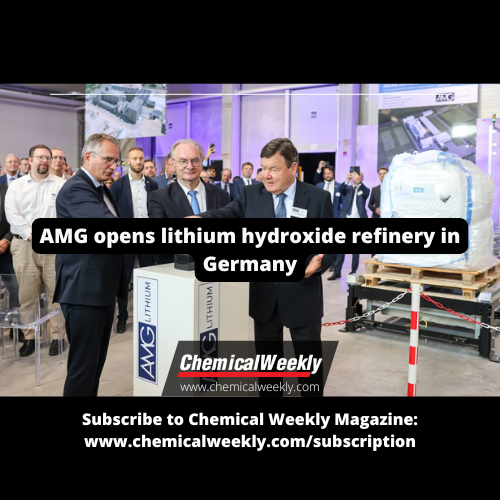
The Netherlands-based AMG Critical Materials recently celebrated the opening of its lithium hydroxide refinery in Bitterfeld-Wolfen, Saxony-Anhalt in Germany.
AMG Lithium, which houses all of AMG’s lithium activities, commissioned production of battery-grade lithium hydroxide at the first of its five modules planned for the site. Annual capacity of one module is 20,000 tons per year – enough for the batteries of around 500,000 electric vehicles (EVs).
AMG said its first module is sold out and by 2030, AMG is aiming to expand annual production up to 100,000 metric tons of battery-grade lithium hydroxide depending on market conditions. The recent Benchmark forecast, which has been revised downward, projects total demand for lithium in batteries in Europe to be 700,000 metric tons in 2030. AMG’s potential production of 100,000 metric tons (assuming all 5 modules), represents 14% market share of the projected applicable market in Europe for 2030.
Dr. Heinz Schimmelbusch, CEO of AMG said, “With the refinery, we are the first mover, making a decisive contribution to securing the supply of the critical raw material lithium for the industry in Germany and Europe. The establishment of our own complete lithium value chain also contributes to the European Critical Raw Materials Act and offers greater independence for raw materials and critical materials.”
Dr. Stefan Scherer, Managing Director of AMG Lithium, added, “AMG is forward looking – developing cutting-edge technology and materials to support the market development of next generation, sulphur-based all-solid-state-batteries closely together with the main players in the industry.”
Lithium hydroxide is an important raw material for the production of cathode materials for batteries in EVs and thus for the path to climate-neutral mobility. With the refinery in Bitterfeld, AMG is primarily aiming to supply customers who manufacture in Europe.